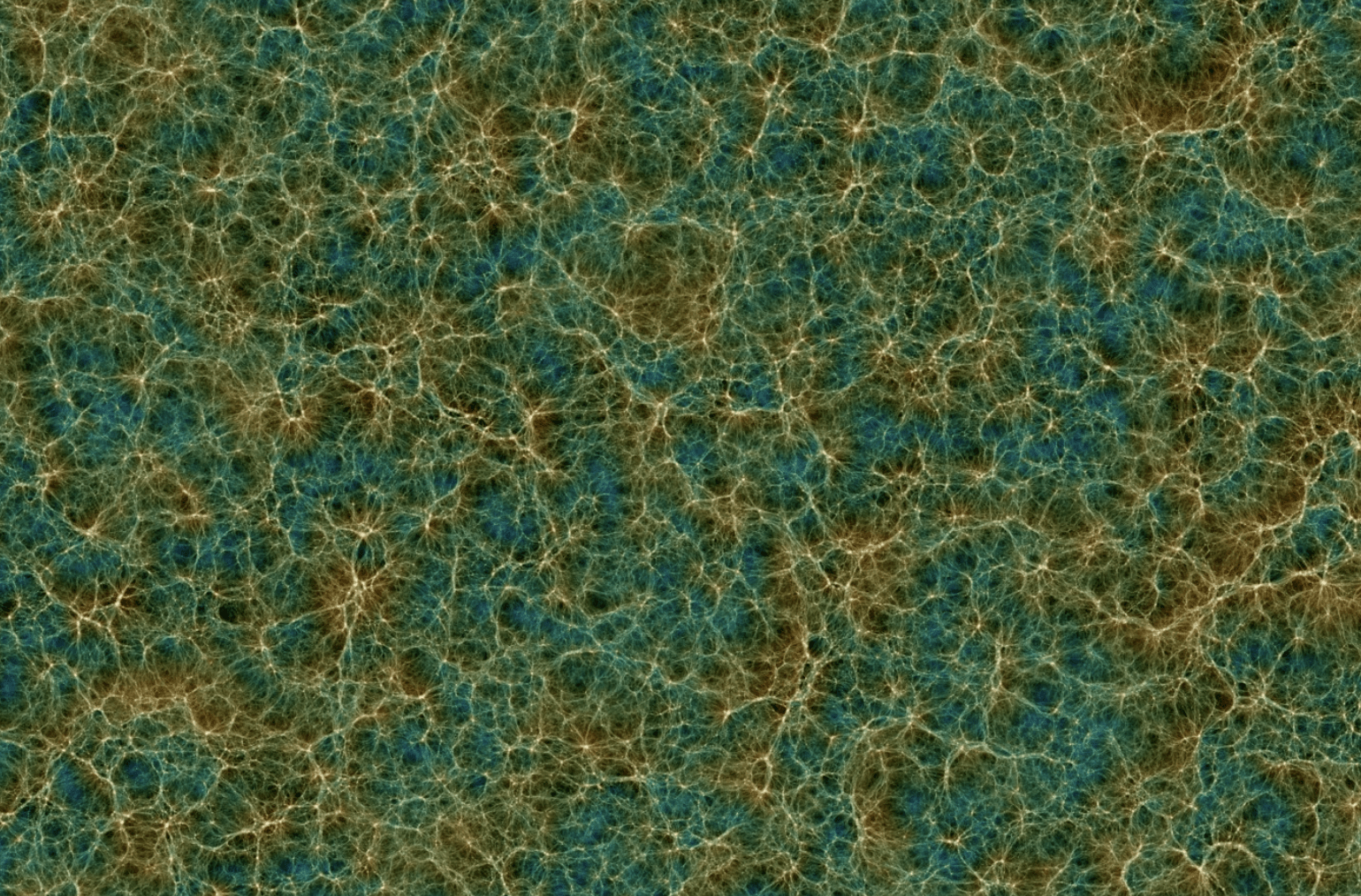

Available simulations for cosmological analyses
Yuuki Omori (KICP/UChicago)
mm-wave Universe 06/25/2025
Yuuki Omori (U.Chicago/KICP)
CosmoForward -- 02/10/26



Why do we need simulations?
- Covariance
- Real surveys have complex geometries (e.g., survey boundaries, masks) and instrumental systematics may be difficult to write down analytically.
- Computing the covariance matrix for multiple probes, including cross-correlations, is analytically challenging due to the complex, interconnected nature of these signals.
- Map validation & comparison with data
- High-fidelity simulations needed for comparison with data.
- High-fidelity simulations needed for comparison with data.
- As a modeling tool
- Nonlinear structure prediction.
- Many realizations with varied cosmological/astrophysical parameters which are then interpolated (i.e., emulators).
- For visualization
Types of cosmological simulations
Gaussian/lognormal map realizations
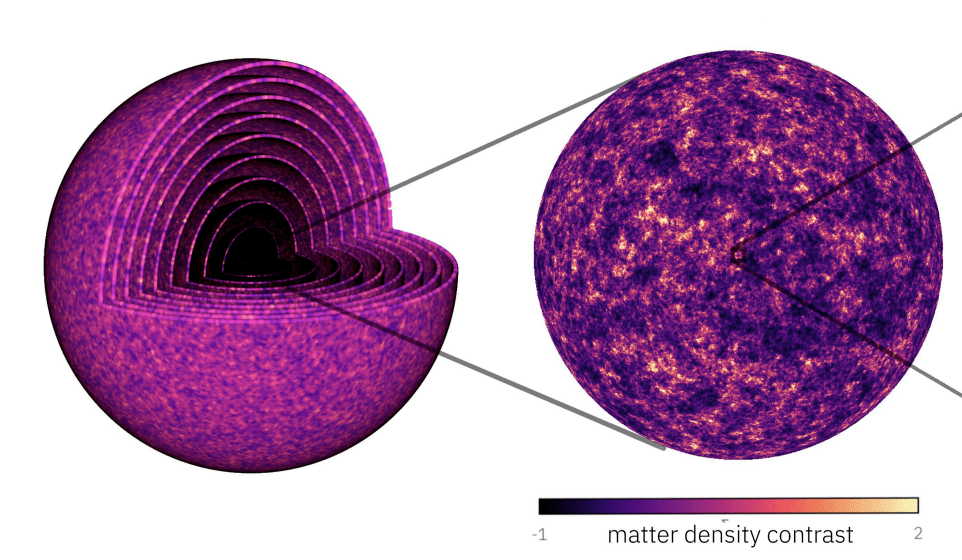
Fast approximate
particle mesh
Gravity-only N-body
Hydrodynamical
Computational
cost

Types of cosmological simulations
Gaussian/lognormal realizations
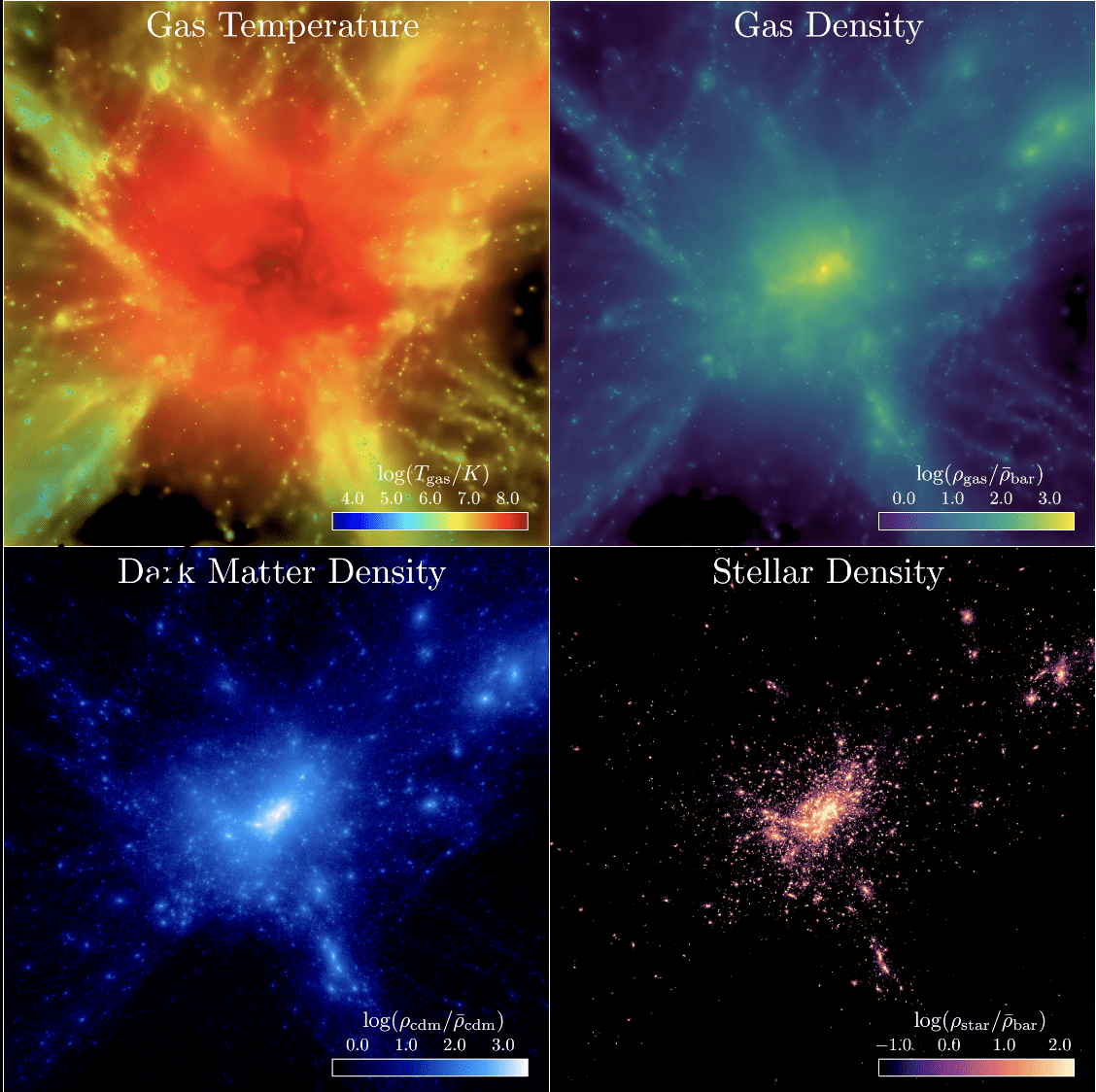
- Gaussian simulations:
- the fields are drawn so that their two-point statistics match a prescribed set of angular power spectra.
- Simple and fast to generate.
-
Lognormal simulations:
- Preserves large-scale correlations but enforces positivity of densities
- Captures key non-Gaussian features: positive skewness, enhanced high-density tails.
- Still simple and fast to generate.
- Codes that do this: FLASK/GLASS
-
Supports galaxies, shear, convergence, and CMB fields
-
Widely used by CMB & LSS mock challenges.
-
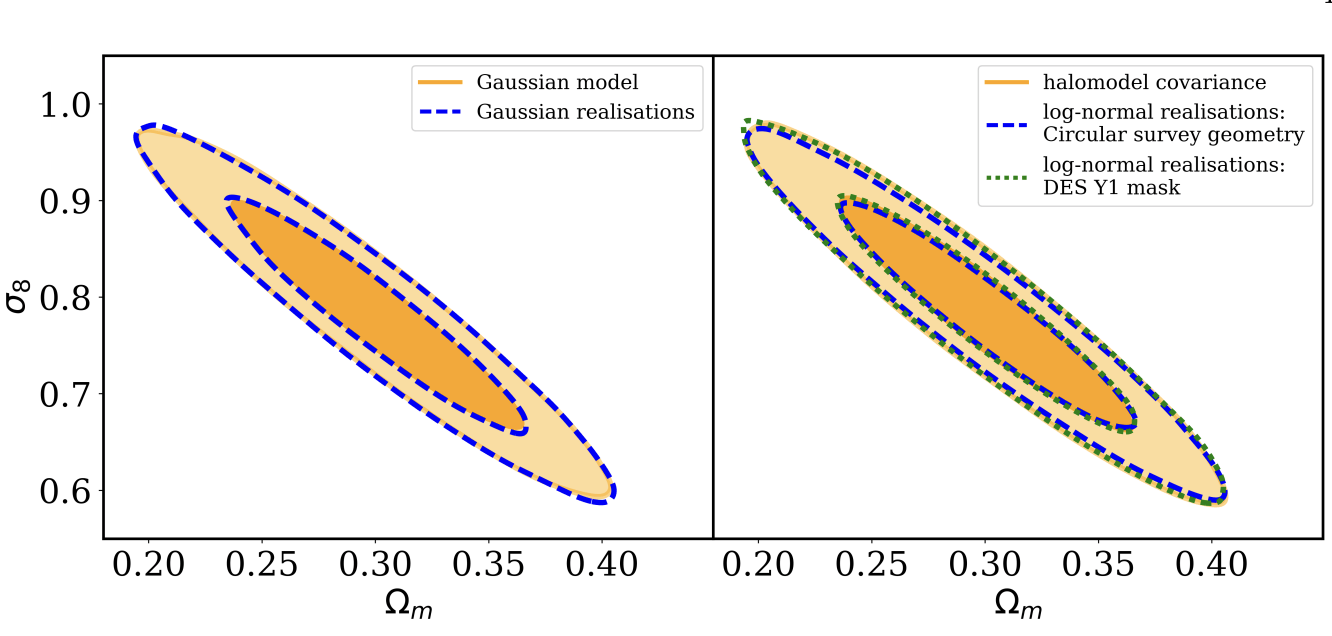
Krause et al. 2017
Tessore et al .2023
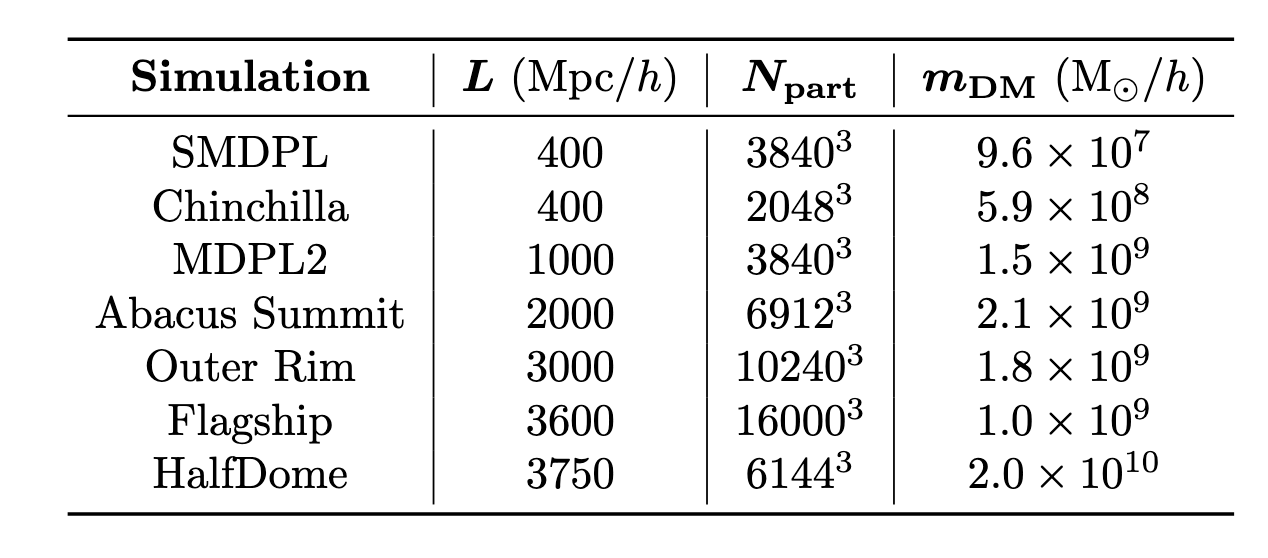
Gravity-only N-body simulations
-
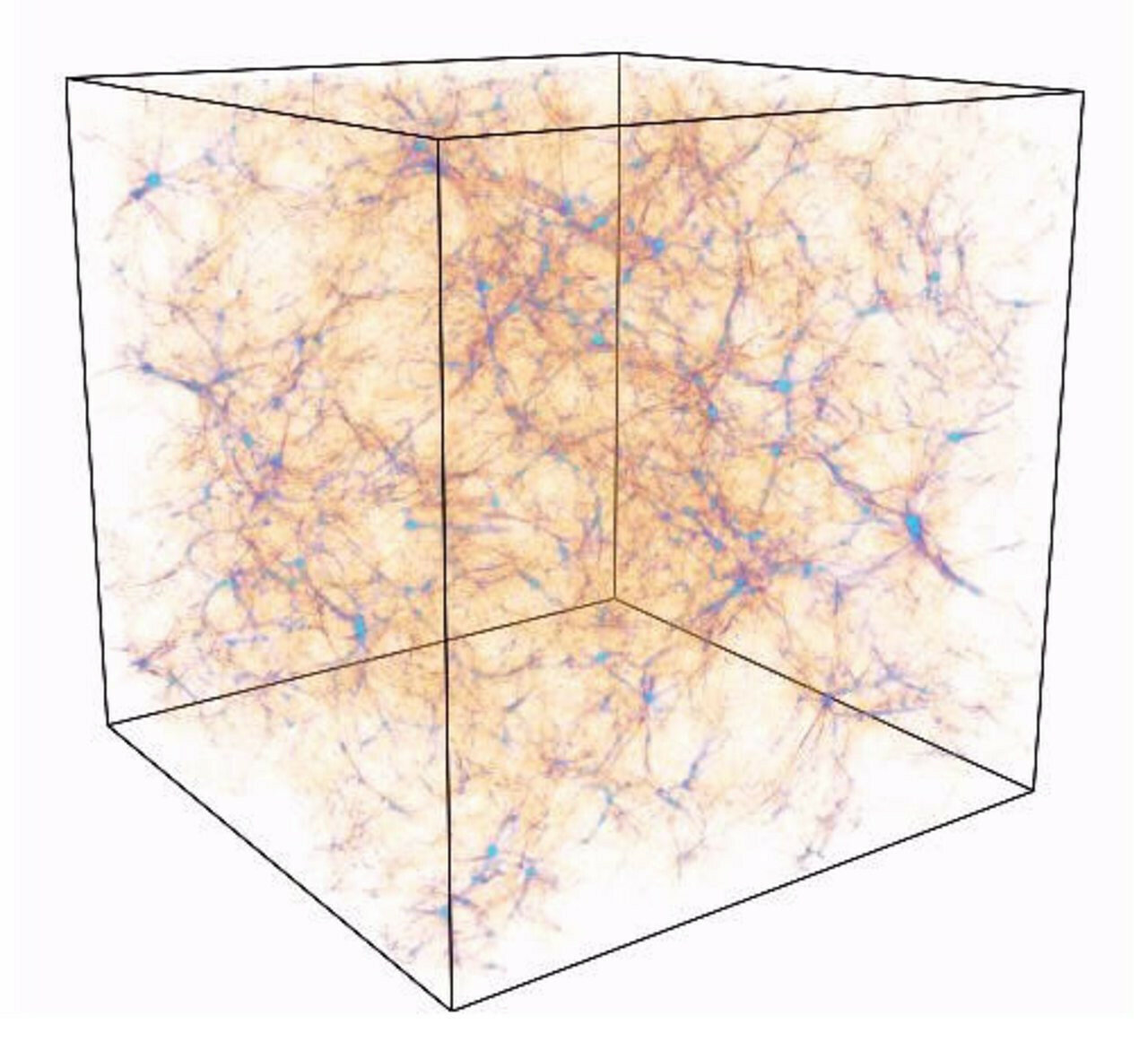
Dark matter is represented by particles interacting only via gravity.
-
Forces are evaluated with hierarchical tree (or TreePM) methods rather than purely grid-based schemes, enabling high force resolution into the nonlinear regime.
-
Computationally expensive, but conceptually simple: evolve only the collisionless gravitational dynamics, and scale efficiently to large volumes and particle counts.
-
Galaxies are added in post-processing via flexible galaxy–halo connection models (HOD, SHAM, semi-analytic models, or related prescriptions).
-
The workhorse simulation approach for precision cosmology.
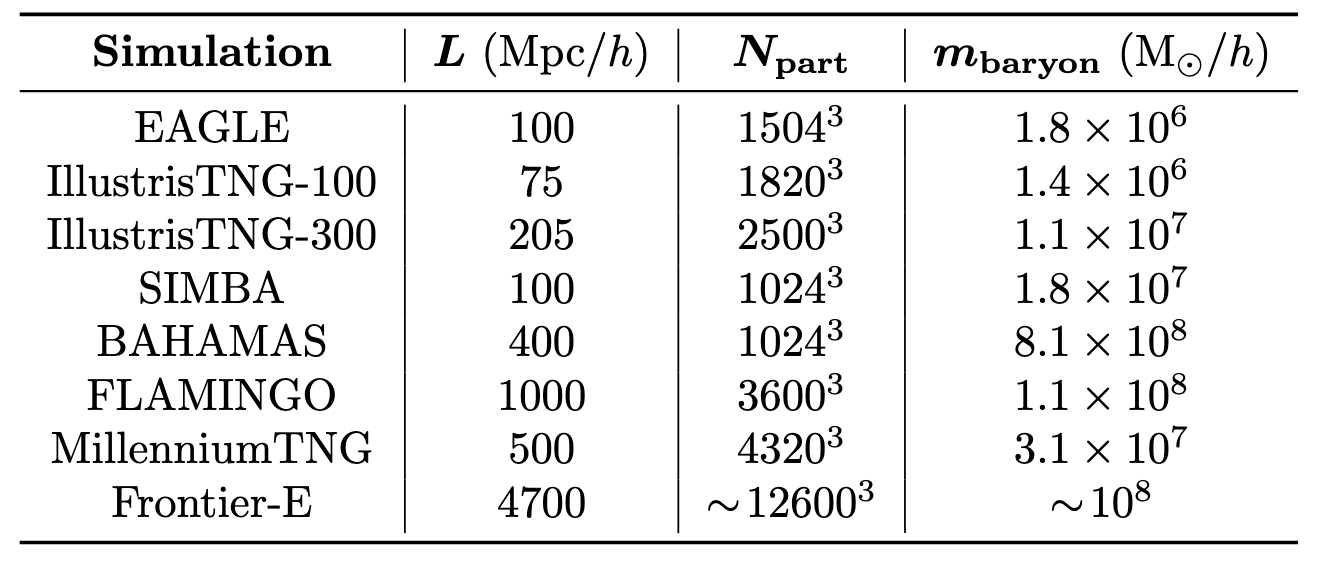
Hydrodynamical simulations
- In addition to gravitational forces, solves fluid equations governing gas pressure, shocks, cooling, and heating.
- Incorporates subgrid prescriptions for unresolved physics such as star formation, supernova feedback, AGN feedback, and radiative cooling, which are calibrated to reproduce key observables (e.g., stellar mass functions, galaxy sizes).
- Produces realistic galaxy populations with observable properties (luminosities, colors, morphologies, gas fractions) directly from the simulation.
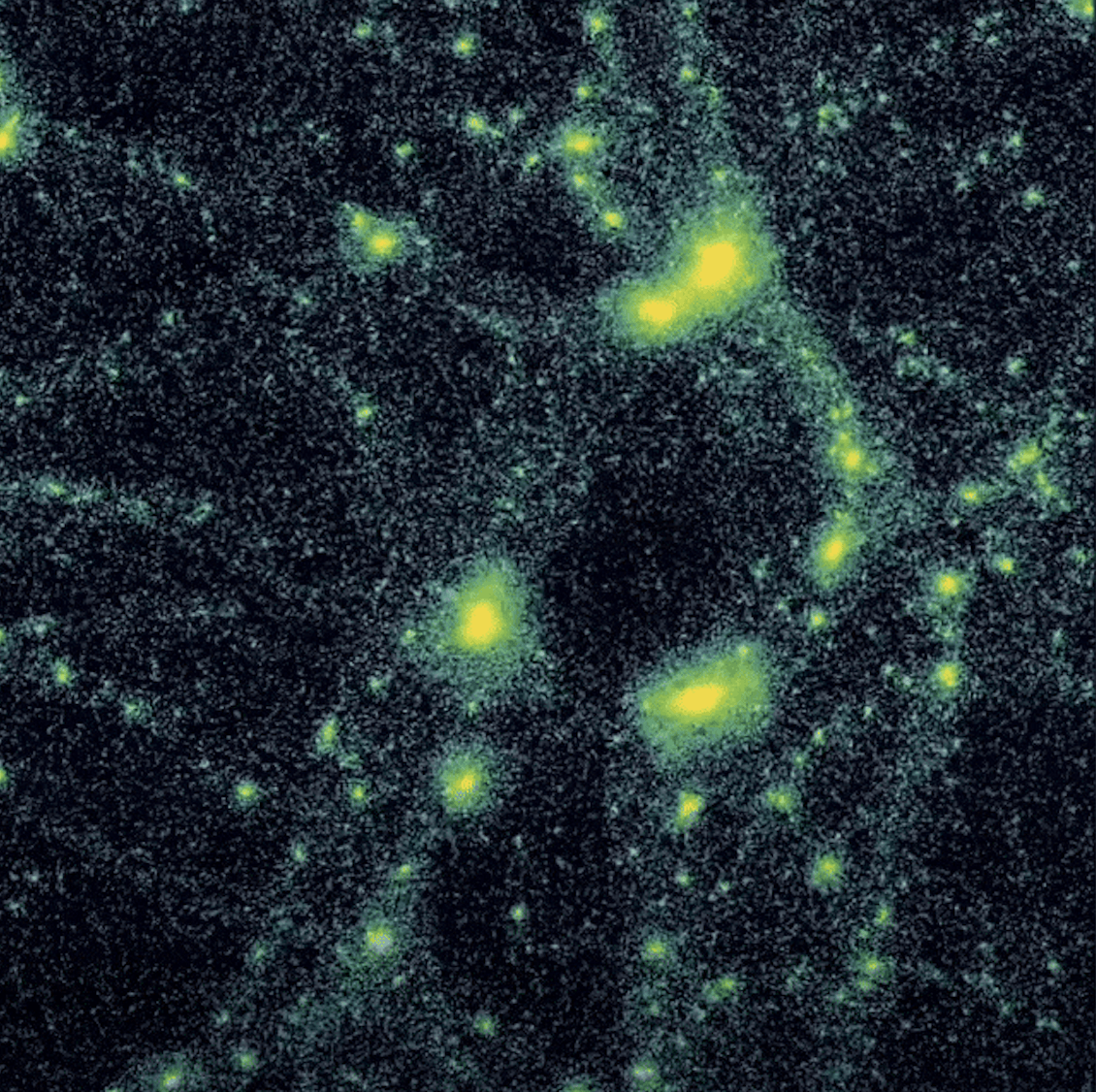
- Significantly more expensive than dark matter only runs, limiting them to smaller volumes and/or lower resolution (difficult to span large parameter space).
Frontiere et al. 2025
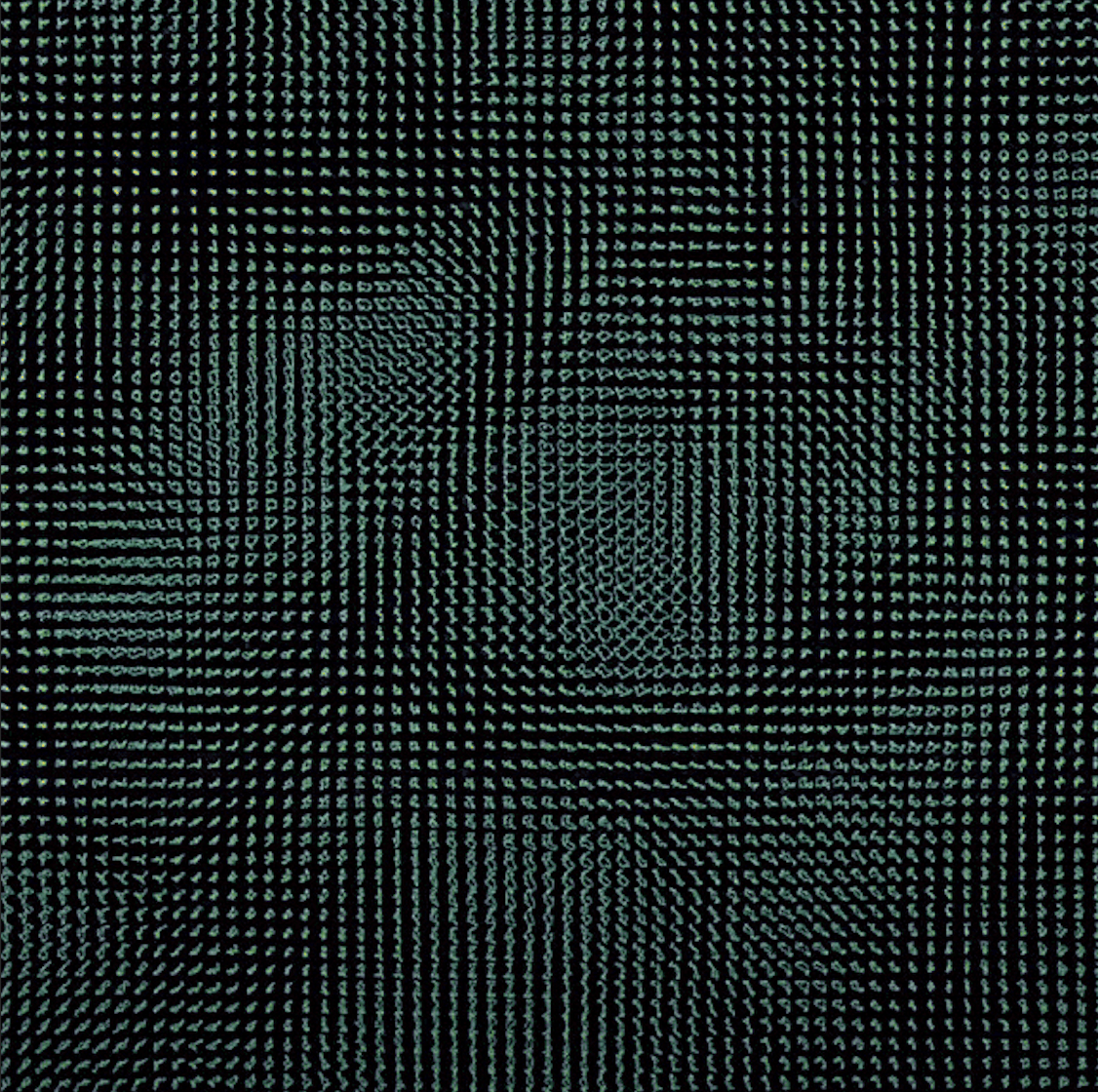
Approximate PM simulations
- Solve gravity on a grid, where resolution is set by the mesh cell size.
- Computationally much cheaper, but lose accuracy on small scales.
- Newer codes written with automatic differentiation (i.e., in JAX)
- Every operation from initial conditions to final density field differentiable with respect to input cosmological parameters and/or initial conditions.
- Enables gradient-based inference: cosmological parameters and high-dimensional initial condition fields can be optimized or sampled (e.g., via Hamiltonian Monte Carlo).
Approximate PM simulations
- Solve gravity on a grid, where resolution is set by the mesh cell size.
- Computationally much cheaper, but lose accuracy on small scales.
- Newer codes written with automatic differentiation (i.e., in JAX)
- Every operation from initial conditions to final density field differentiable with respect to input cosmological parameters and/or initial conditions.
- Enables gradient-based inference: cosmological parameters and high-dimensional initial condition fields can be optimized or sampled (e.g., via Hamiltonian Monte Carlo).
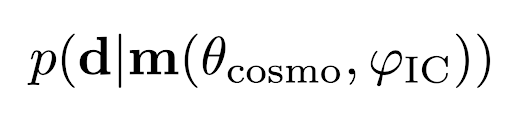
Novel approach of using the pixel values of a given map as a data vector instead of relying on summary statistics (powerful for studying late-time Universe).
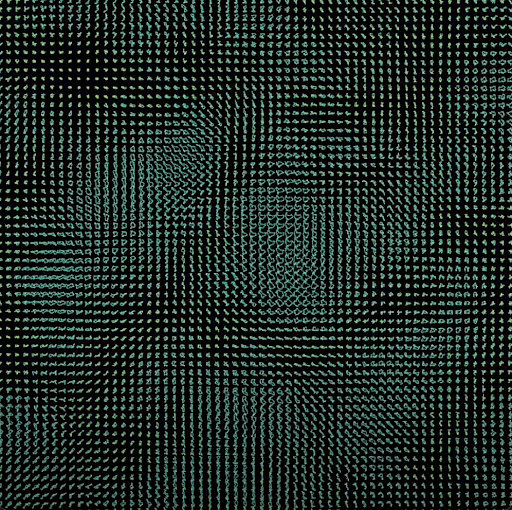
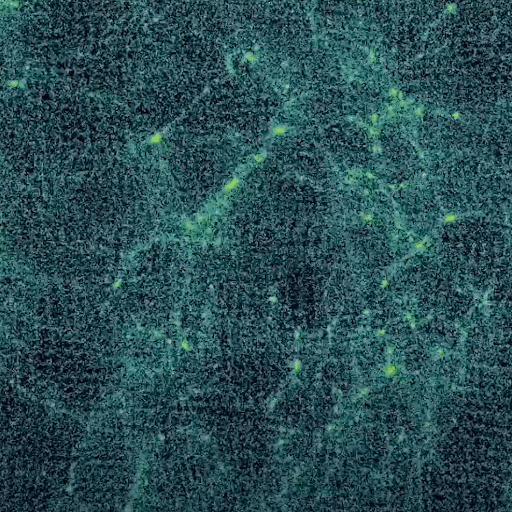
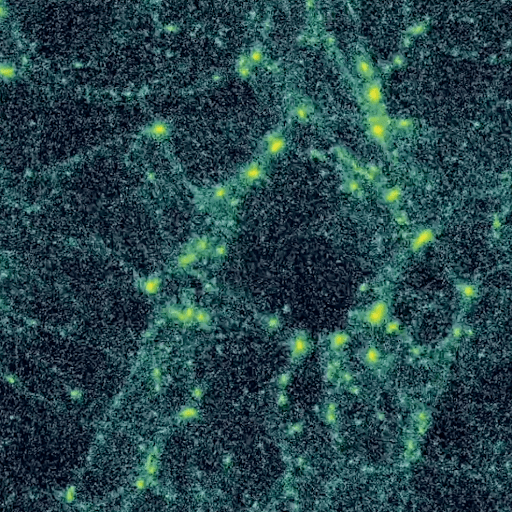




Sampling (HMC/NUTS)
Simulation
Sampled parameters
Compare model map with data map d
Output map model
Field-level inference
Extremely powerful but also challenging !
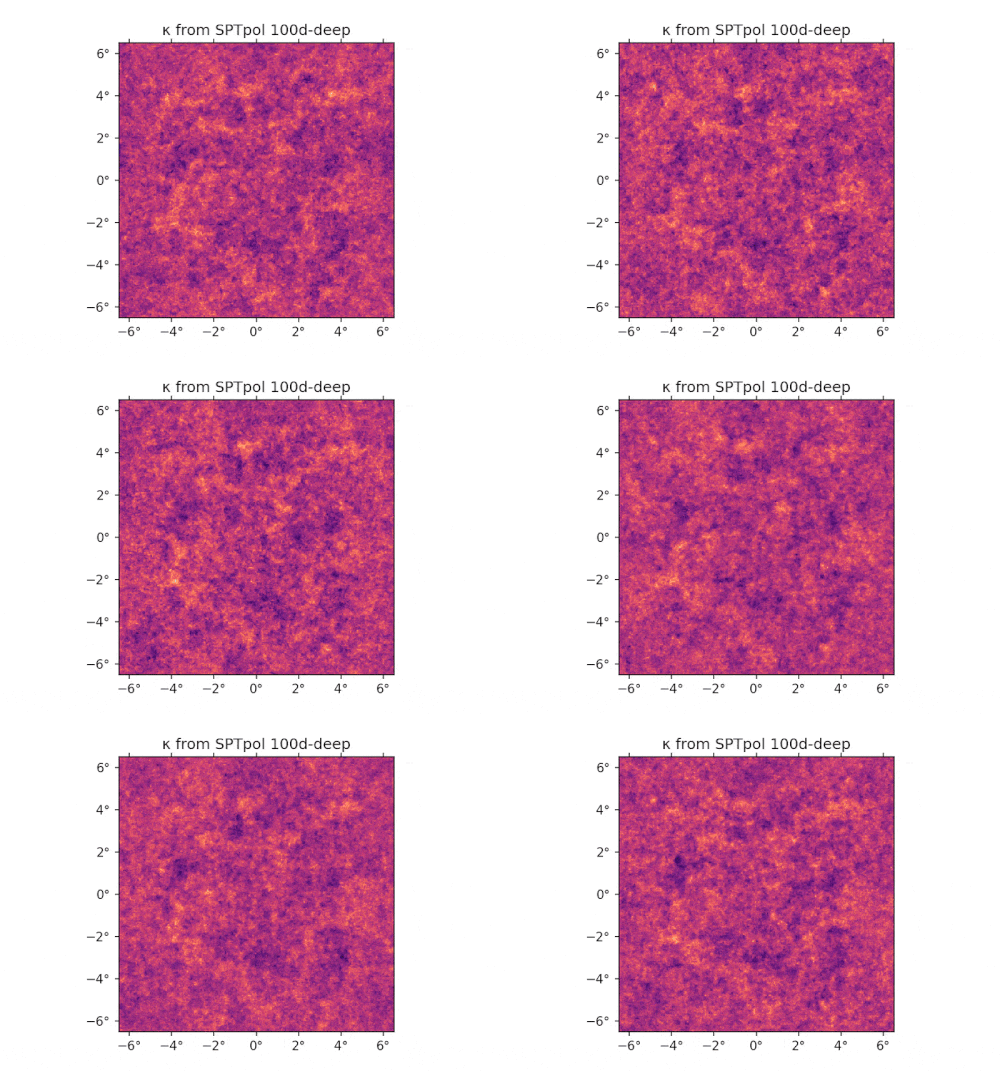
Millea et al. 2021
(Explicit inference)
.....
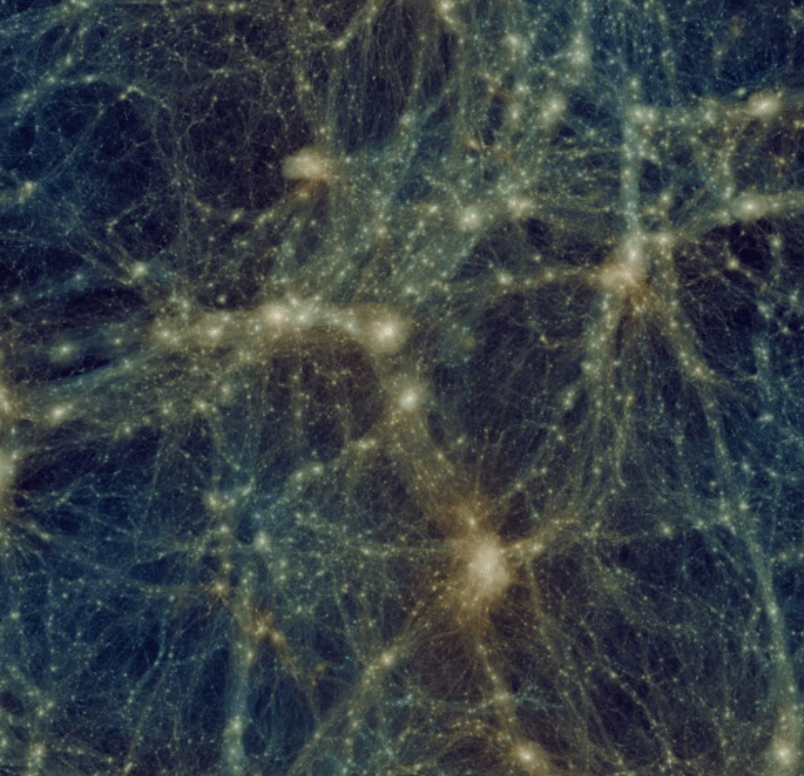
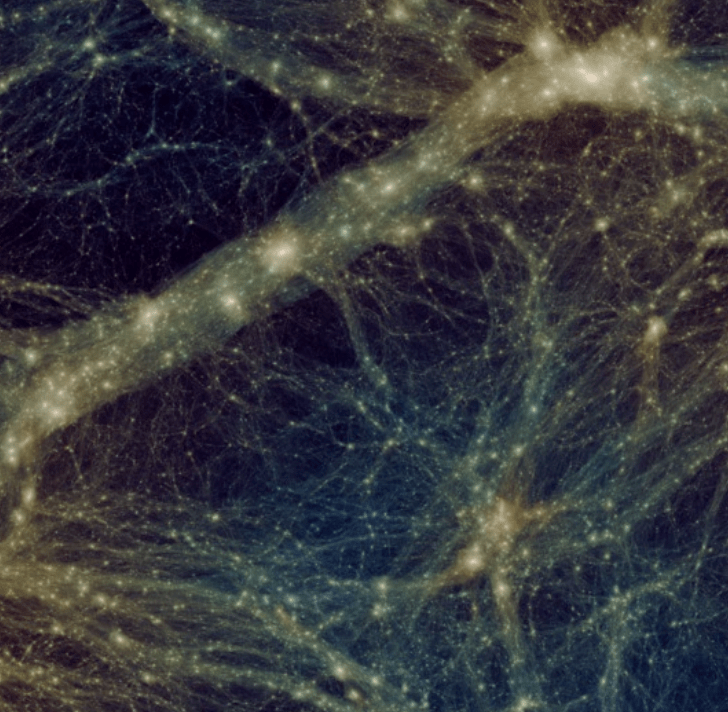
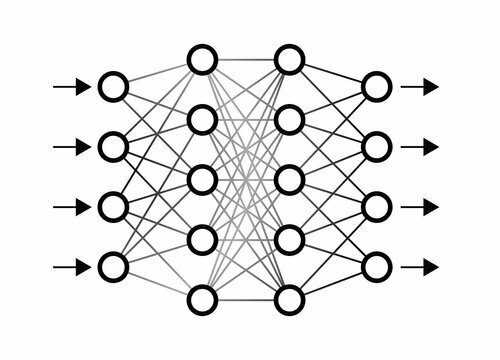
- This can be done using full-body simulation (although computationally heavy).
- Sampling much easier compared to explicit inference.
- Seems to work but somewhat of a blackbox.
- Always a question of optimality in the compression step.
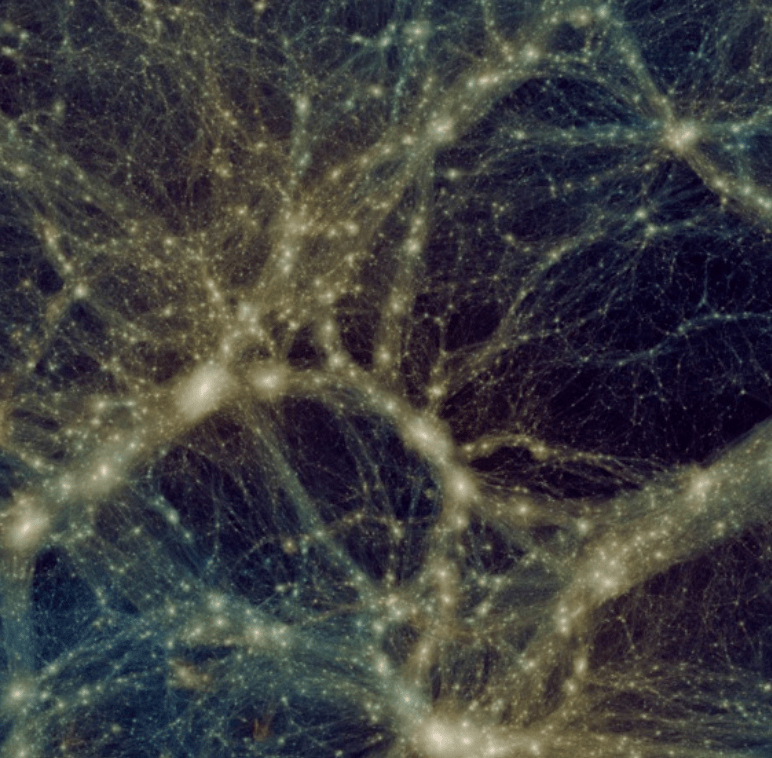
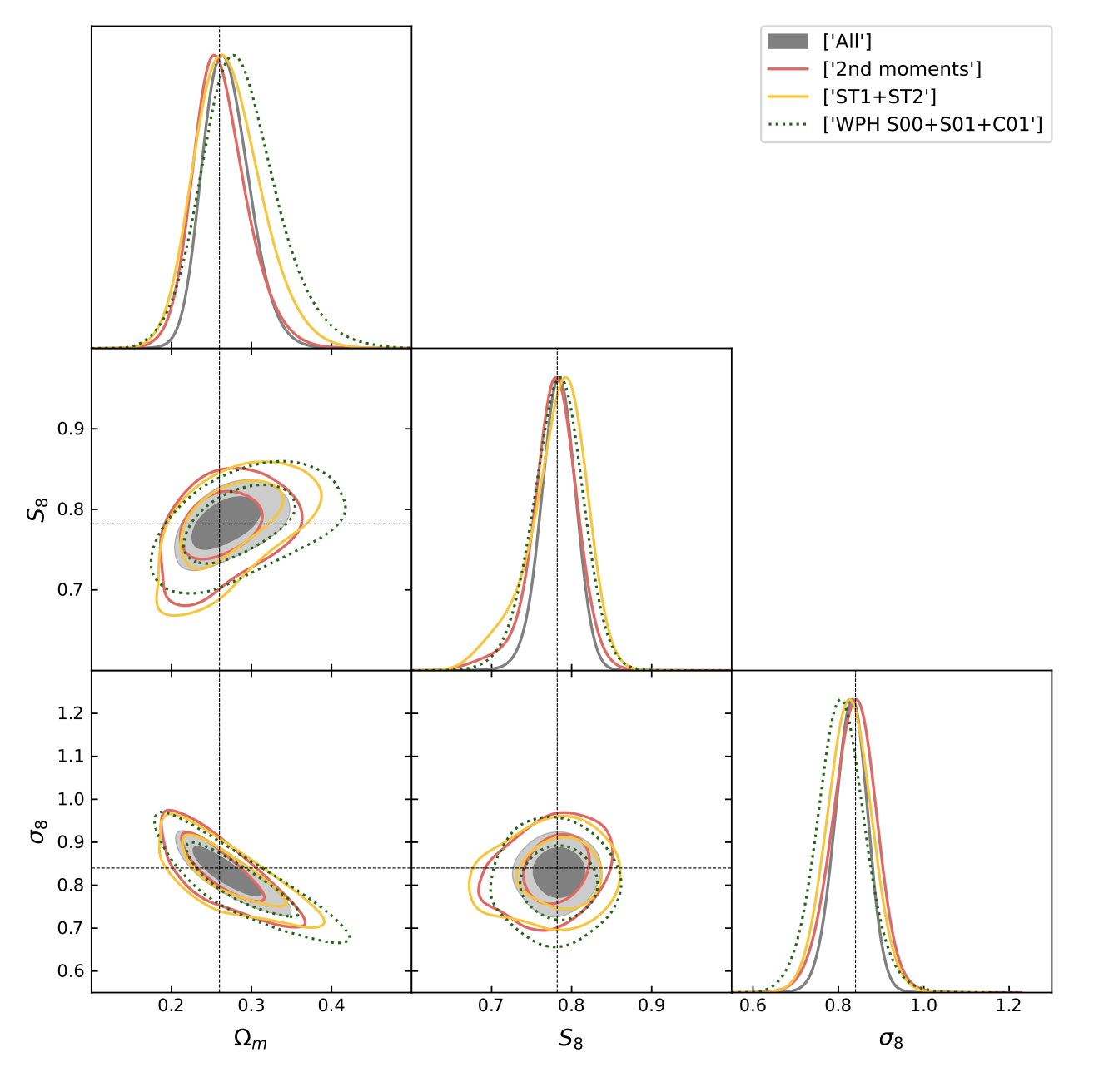
Gatti et al. 2023
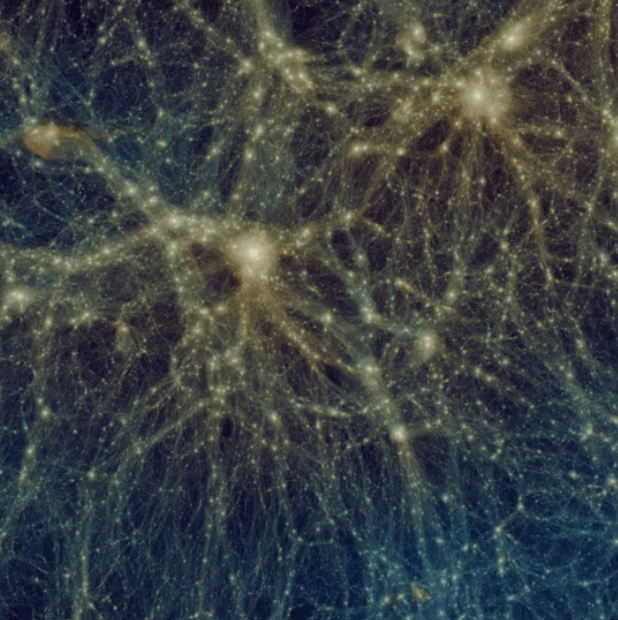
Field-level inference
(Implicit inference)
AI/ML assisted maps
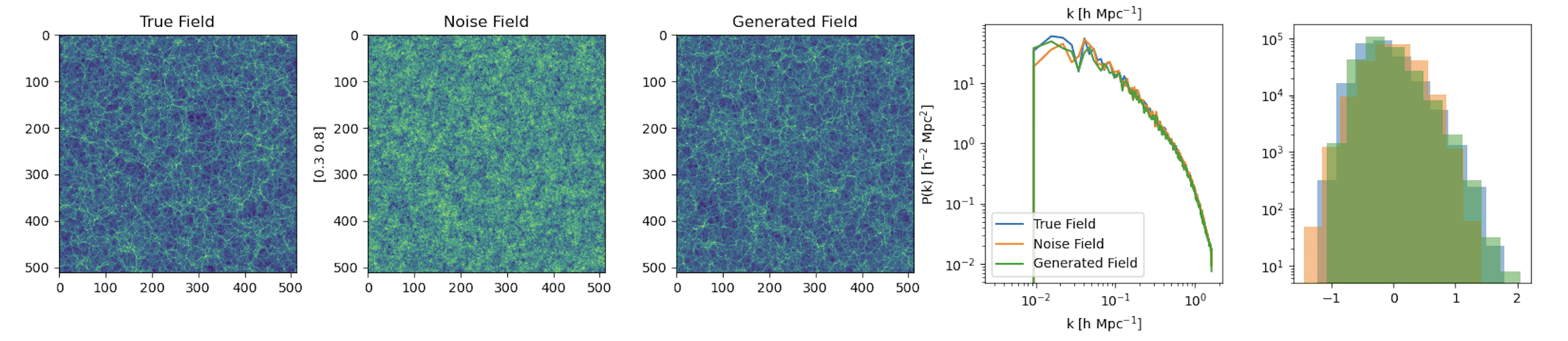
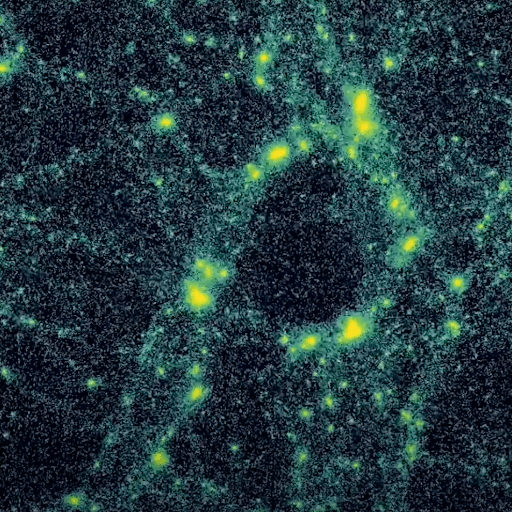
Density field generation using conditional flow matching (work by Kevin Hong)
See also Han et al. 2021
Raw simulations to observables
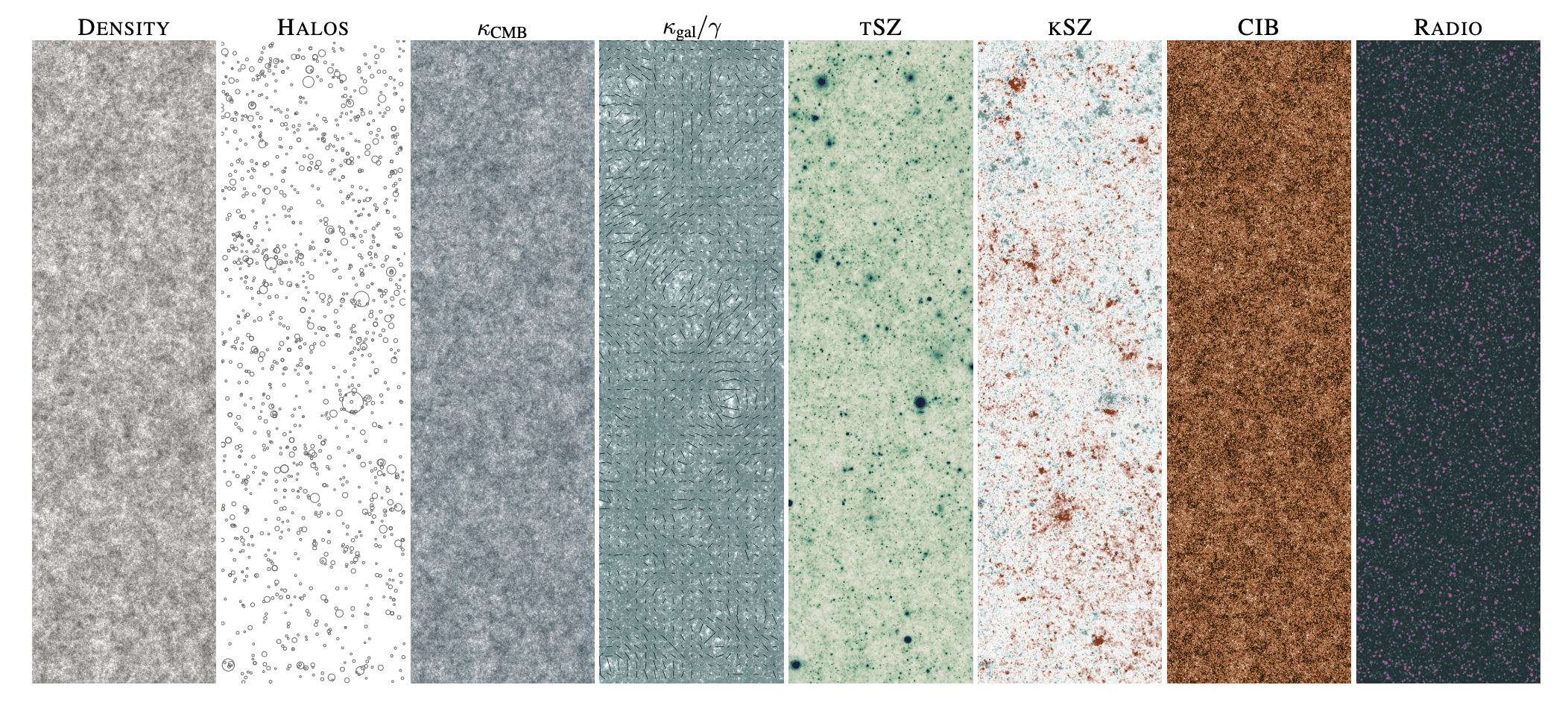
CMB observables
- Observables we are interested in:
- CMB lensing
- tSZ
- kSZ
- CIB
- radio
- CO/CII
- reionization
- Galactic dust
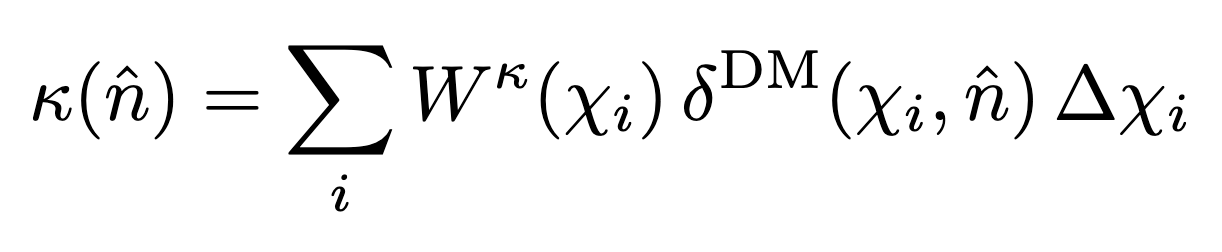
Raytracing:
Born:
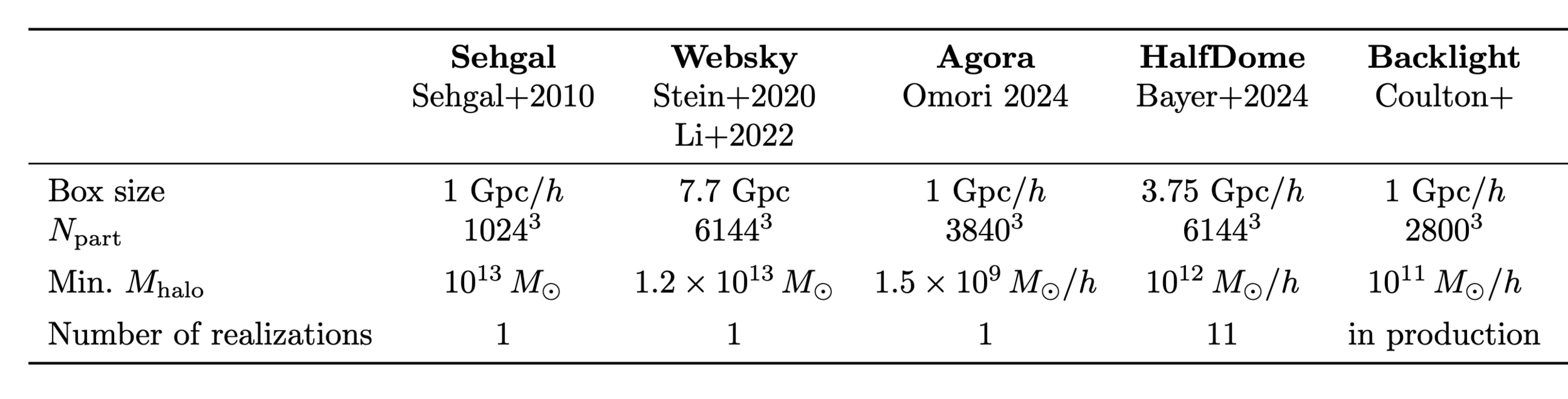
CMB observables
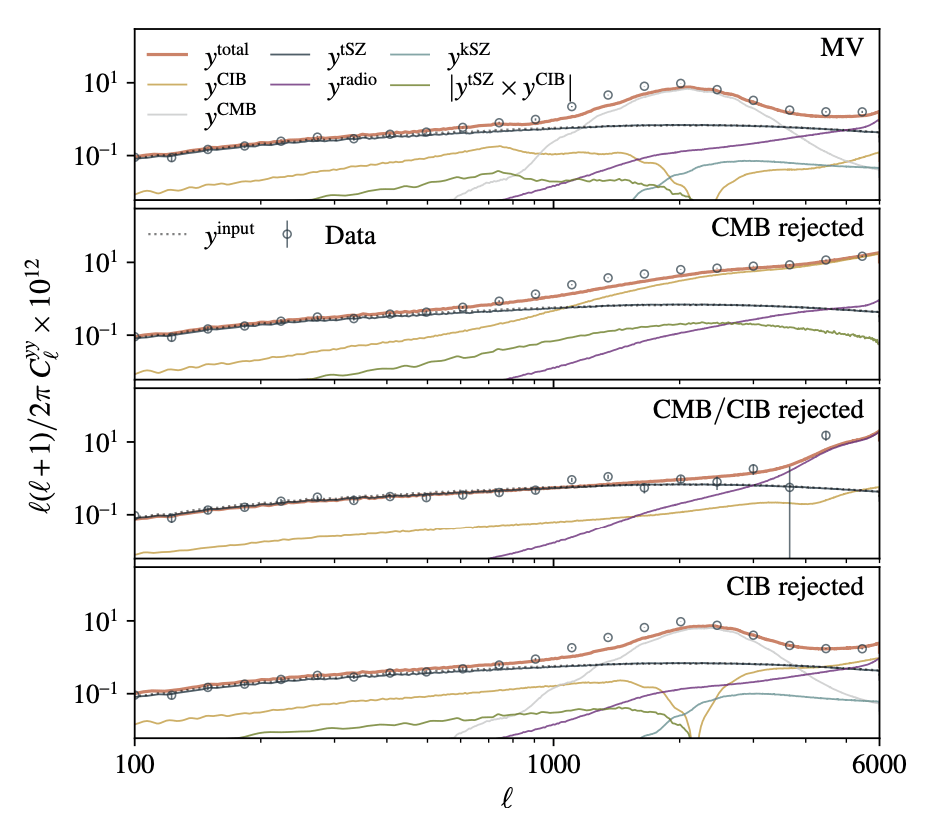
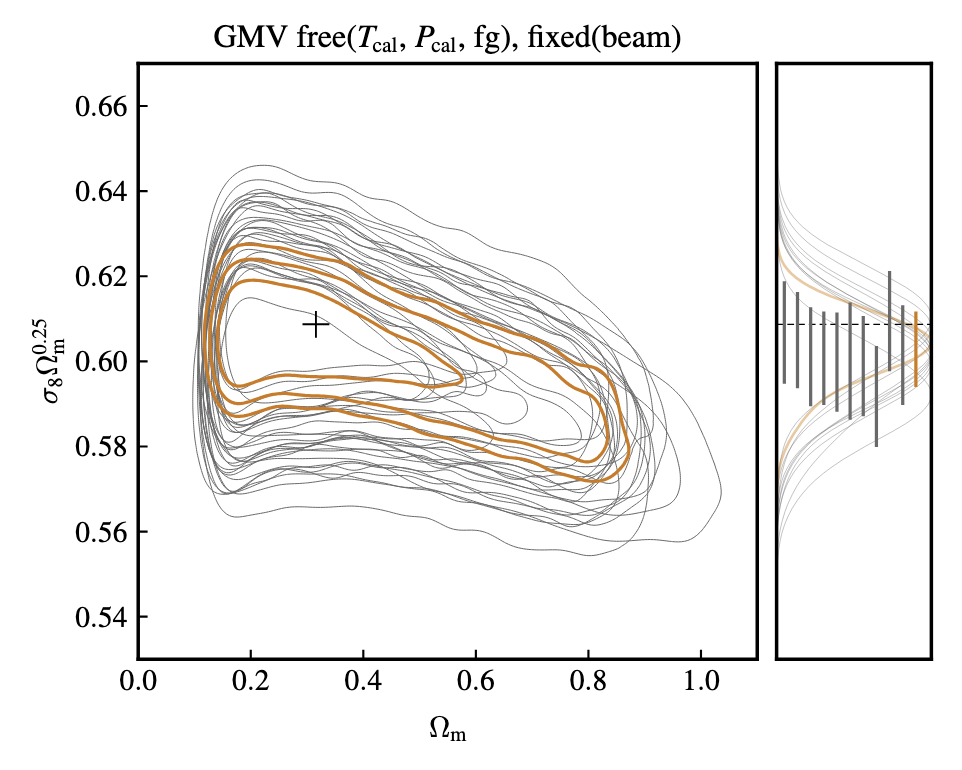
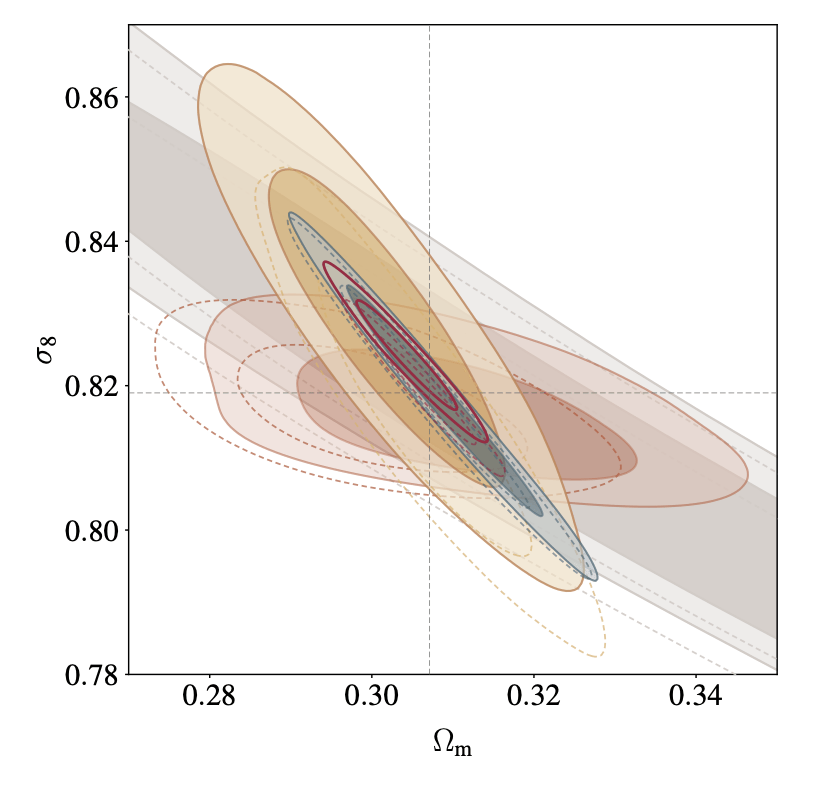
- Just implementing the astrophysical components is not enough.
- We need to pass the real through real analysis pipelines to make sure that sims are correct.
Omori 2024
LSS observables
- Observables we are interested in:
- Source galaxy shapes (galaxy weak lensing):
- Via raytracing like CMB lensing.
- Lens galaxies:
- Cardinal (DES): subhalo abundance matching (SHAM) including orphan galaxies and mass-dependent scatter, plus improved color assignment and small-scale lensing treatment.
- CosmoDC2/SkySim5000 (Rubin): resampling galaxies from MDPL2 whose galaxy properties come from UniverseMachine (an observation-calibrated empirical galaxy-halo model) + enriching photometric properties using a Galacticus library.
- Flagship (Euclid): populates halos with galaxies using HOD + abundance matching, calibrated to observed correlations and basic galaxy properties, (fluxes/SEDs, sizes/shapes, redshifts).
- Galaxy clusters:
- Requires accurate colours.
- Source galaxy shapes (galaxy weak lensing):
Summary
- Cosmological simulations serve multiple roles: covariance estimation, map validation, forward modelling, and visualization.
- A hierarchy of simulation approaches exists, trading computational cost for physical accuracy: Gaussian/lognormal realizations → approximate PM → gravity-only N-body → hydrodynamical.
- Gravity-only N-body simulations remain the workhorse for precision cosmology, with flexible post-processing (HOD, SHAM) to connect dark matter halos to observable CMB foregrounds & galaxies.
- Translating raw simulations into realistic observables (CMB lensing, tSZ, kSZ, CIB, galaxies) requires extensive astrophysical modelling, calibration though data and validation through real analysis pipelines.
- No single simulation meets all needs (yet).